
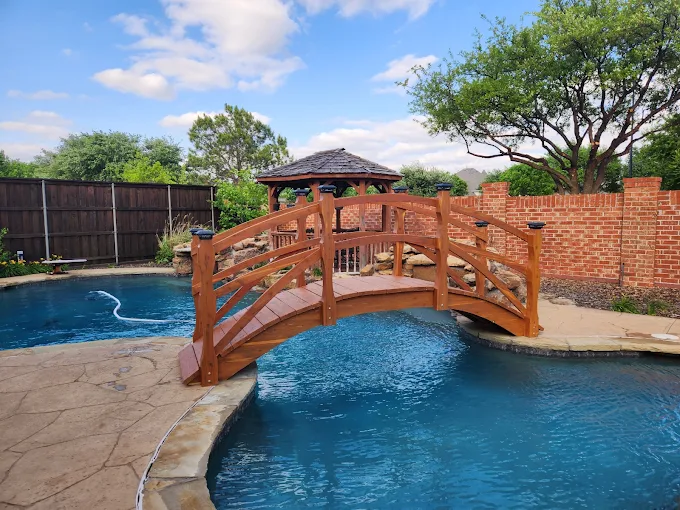
Cedar vs. Pressure-Treated Wood: What’s Best for Outdoor Bridges?
Choosing the right wood for your garden or farm bridge matters more than you think. Here’s why cedar comes out on top — every time.
🌲 Why Wood Choice Matters for Your Bridge
A wooden bridge is more than just a path — it’s a long-term part of your landscape. Whether it’s crossing a creek, decorating a dry stream bed, or used on a farm, the type of wood you choose affects how your bridge performs, lasts, and looks over time.
At Redwood Bridges, we’ve built thousands of bridges since 1997, and we exclusively use Eastern Red Cedar for good reason. Let’s break down why.
📊 Cedar vs. Pressure-Treated Wood: Head-to-Head
| Feature | Eastern Red Cedar | Pressure-Treated Wood |
|---|---|---|
| Rot & Insect Resistance | ✅ Naturally resistant | ⚠️ Chemically treated |
| Environmental Safety | ✅ All-natural, no chemicals | ⚠️ Treated with preservatives |
| Aesthetics | ✅ Warm reddish tones, ages beautifully | ⚠️ Greenish tint, often cracks over time |
| Lifespan Outdoors | ✅ 15–30+ years with minimal care | ⚠️ Shorter if not maintained |
| Smell | ✅ Natural cedar aroma | ⚠️ Chemical odor |
| Maintenance | ✅ Low | ⚠️ Medium to high |
🌿 Why We Use Eastern Red Cedar for All Our Bridges
Eastern Red Cedar isn’t just beautiful — it performs. We use this naturally durable wood because it:
- Resists rot, decay, and insects without chemical treatment
- Can handle outdoor exposure for decades
- Looks amazing in any landscape — from far